
Adopted grave of Reserve Ensign Martinus Rom Colthoff
In remembrance of Reserve Ensign Martinus Rom Colthoff
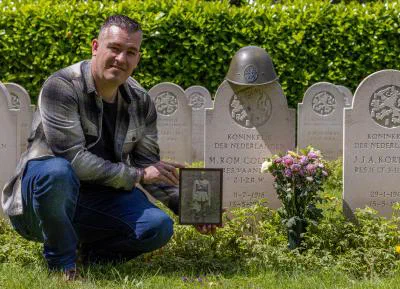
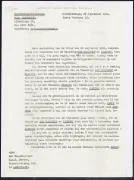
In March 2026, I adopted the war grave of Reserve Ensign Martinus Rom Colthoff at the municipal cemetery in Dordrecht. I decided to do this after researching the story of the young ensign for my book War Graves on the Island of Dordrecht. For a long time, what had happened to Rom Colthoff had faded into obscurity, until I found a letter in the Regional Archive of Dordrecht from the secretary of Dubbeldam describing what had happened to him.The story of Ensign Rom Colthoff is a tragic one, and it is one of the chapters that affected me most deeply as a writer. That is precisely why I chose to adopt his grave: to keep his story—tragic as it is—alive.
About Reserve Ensign Rom Colthoff
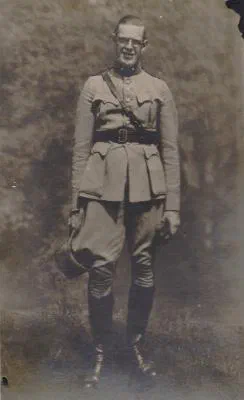
Martinus Rom Colthoff was born on a Thursday, on 11 July 1918 to be precise. He was born in Rotterdam as the son of Isaac Amarentius Rom Colthoff and Cornelia Fransisca Lels. The family had three children, and Martinus was the eldest. He had a brother, Cornelis Jan, and a sister, Jacoba Deliane. The family lived at Vredeman de Vriesstraat 31 in Leeuwarden.
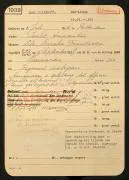
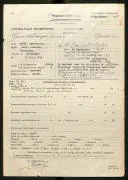
Martinus was well educated for his time. He first attended primary school and later obtained his final diploma at the Rijks Hogere Burgerschool. He then voluntarily took a job as an office clerk at a shipping company. After a training period, he was to join Smit’s International Towing Service in London. Like many men of his age, Martinus was called up for military service. He was enlisted in the Regiment Wielrijders on 9 September 1937. Because of his RHBS diploma, he was soon selected for officer training. On 11 December 1937, Martinus was promoted to corporal, on 5 March 1938 to sergeant‑titulair, and on 1 January 1939 to reserve ensign. On 11 September 1939, Martinus was transferred to the 2nd Regiment Wielrijders, which was part of the Light Division.
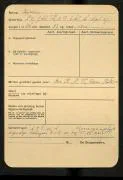
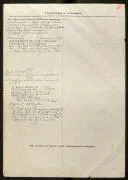
Military service record Reserve-Ensign Martinus Rom Colthoff
Below you will find the conscription card and service record of Martinus Rom Colthoff.
The outbreak of the war
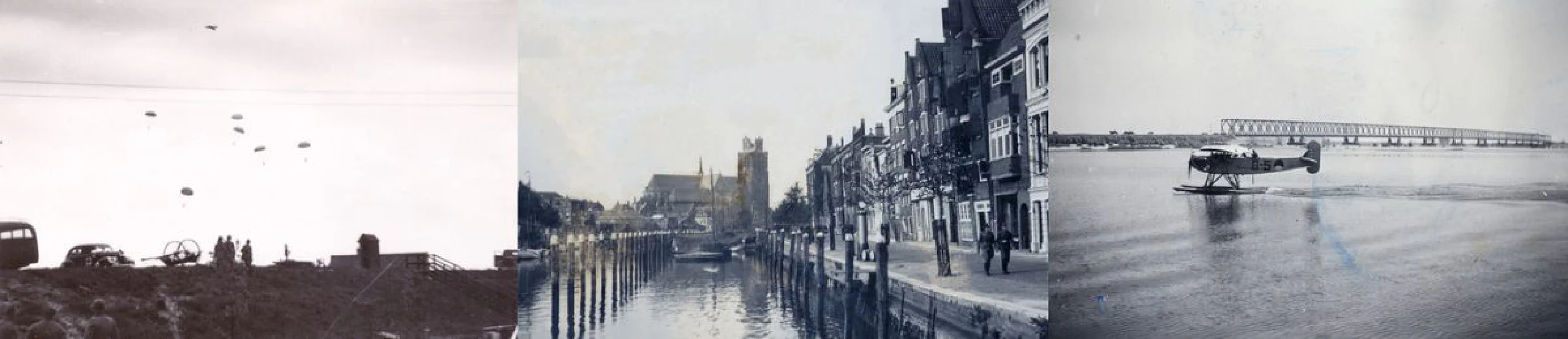
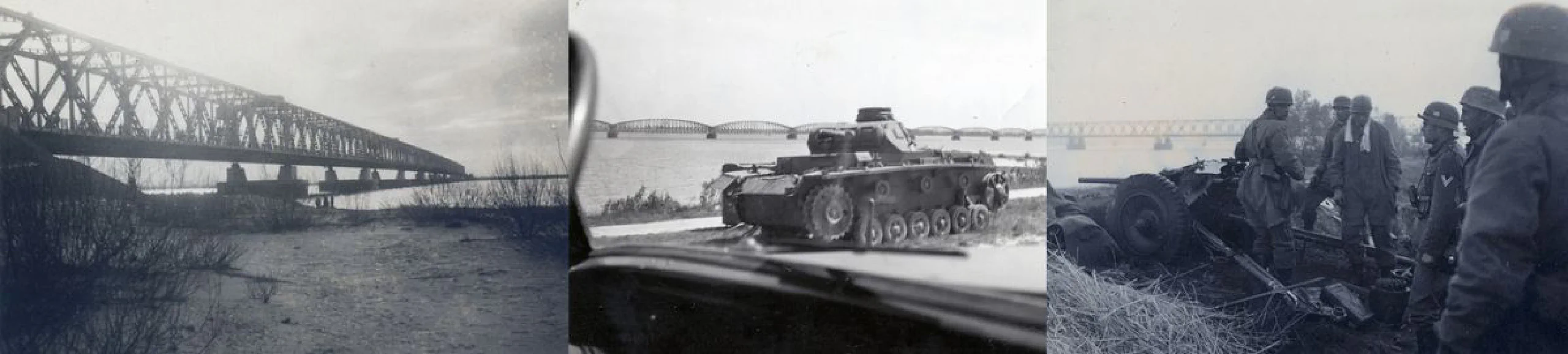
The 2nd Regiment of Cyclists, which as mentioned earlier was part of the Light Division, was stationed across various locations in the province of North Brabant. The Light Division was expected to remain in North Brabant only on the first day of the war and then move directly to Fortress Holland once the outbreak of war became a reality. The plan for the Light Division was to use the Moerdijk bridges for this movement. However, on 10 May 1940 this was impossible due to the sudden capture of the Dutch bridgehead at Moerdijk following landings by German paratroopers. A different route was required.
The battalion of Ensign Rom Colthoff was still stationed at Camp Oirschot on 10 May 1940. At around 09:30 hours, it marched off in the direction of Fortress Holland. The planned route ran via Tilburg – Keizersveer – Gorinchem. Along the way, the battalion received the order to guard part of the northern bank of the River Merwede. That order was then changed: as part of a combat group of 2 R.W., it was to seize the new bridge over the Noord at Alblasserdam. However, the 2nd Company, to which Rom Colthoff belonged, had been stationed at Blerick on 10 May 1940, behind the River Meuse near Venlo. Two sections of the company were tasked with carrying out patrol duties, while the other two sections were to rejoin the rest of the 1st Battalion in Oirschot. According to the report of Second Lieutenant H. Kokkeel, the 3rd and 4th Sections were assigned the patrol duties. Captain H. Govers, commander of 2‑I‑2 R.W., however, states in his report that it concerned the 2nd and 4th Sections. The 4th Section was under the command of Ensign Rom Colthoff; however, according to Second Lieutenant Kokkeel’s report, he was off duty and present at the company office during the night of 9 to 10 May. Captain H. Govers states the following in his report:
“Since patrols were carried out in groups during the night, all section commanders were present with their unit of 2‑I‑2 R.W. when departing from Venlo.”
The author interprets this as an indication that the ensign was not with his patrolling section. In any case, it was only on 11 May 1940 that most of the remaining sections of 2‑I‑2 R.W. were fully reunited with the battalion, after Sergeant Weijgers reported in with ten men. He had crossed the River Meuse near Venlo with his section and eventually reached Alblasserdam after all (presumably the 2nd or 4th Section).
On 11 May 1940, the greater part of the Light Division had meanwhile also reached the Alblasserwaard and the bridge over the Noord at Alblasserdam. The division received the order to cross the bridge and push on toward Rotterdam. After several casualties on the Dutch side, this action was abandoned rather quickly. The Light Division then received a new assignment — one that would in fact prove to be far more demanding: the formation was to clear the Island of Dordrecht (leaving part of its combat strength behind at the bridge over the Noord) and subsequently advance through the Hoeksche Waard and the bridge at Barendrecht toward Waalhaven.
At around 14:00 hours on 11 May 1940, I‑2 R.W. received the order to march via Papendrecht toward Dordrecht. Shortly beforehand, 2‑I‑2 R.W., with its 1st and 3rd Sections, had been bombed by Luftwaffe aircraft, though no casualties were sustained. According to orders, I‑2 R.W. was to place itself under the command of the local garrison commander, Lieutenant-Colonel J.A. Mussert. During the night of 11 to 12 May, 1‑2 R.W. once again came under the command of the Light Division.
The plan of the Light Division was as follows: three combat groups, each consisting of a cyclist battalion and supported by troops from Group Kil, would advance side by side toward three designated objective lines. Only once all troops had reached their respective objectives would the advance toward the next line begin. I‑2 R.W., under Major Eggens, formed the left group; III‑2 R.W., commanded by Major Van den Bosch, formed the centre group; and II‑1 R.W., under Major Kloppenburg, formed the right group. II‑2 R.W., the fourth cyclist battalion, was initially held in reserve. The company of Ensign Rom Colthoff was assigned to III‑2 R.W. The company was to advance via the Stevensdijk toward the Zeedijk. During this movement, the 3rd Section of 2‑I‑2 R.W. reached the Schenkeldijk–Zeedijk crossroads. This position was soon abandoned again due to artillery fire, after which 3‑2‑I‑2 R.W., now under the command of Lieutenant Kokkeel, received its own separate assignment.
In the meantime, Ensign Rom Colthoff had been assigned to the 3rd Section. Captain H. Govers writes:
“After the Schenkeldijk–Zeedijk crossroads had been abandoned again on the evening of 12 May, 2‑I‑2 R.W. was split into two parts. When I returned to my unit—after having reported to C‑I‑2 R.W.—I found only the 1st Section under Lieutenant Lugte (and the command group) still present along the roadside. With them I proceeded again toward III‑2 R.W. I learned that the 3rd Section had been given a special assignment, and to the best of my knowledge both Ensigns Bierens and Rom Colthoff were with this section, as well as Lieutenant Kokkeel, who, together with several other men of 2‑I‑2 R.W., had reported to the command post of C‑I‑2 R.W. shortly beforehand.”
At around 22:00 hours on 11 May 1940, Ensign Rom Colthoff received the order from Lieutenant Kokkeel to take up a guard post near the Achterweg. When the lieutenant later that evening inspected the posted guards, it became clear that the ensign had not returned from a reconnaissance. On his own initiative, the ensign had gone ahead to scout the road in front of the guard post, and when Lieutenant Kokkeel inquired about him half an hour later through an orderly, the ensign had still not returned. During the May days, Ensign Rom Colthoff remained missing; no one knew what had happened to him.
An end to the uncertainty
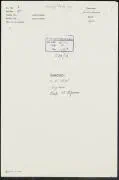
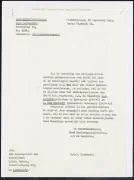
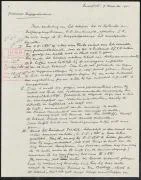
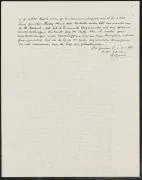
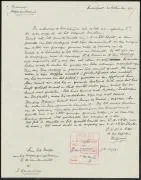
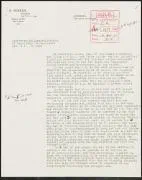
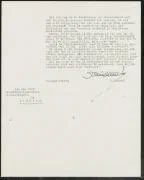
For weeks after the May days of 1940, the young ensign remained missing. His father made desperate attempts to discover his son’s fate. On 1 July 1940, for example, he wrote a letter to the commander of the 2nd Regiment of Cyclists to obtain the serial number of his son’s pistol. He also contacted several soldiers who reported that they had gone on patrol with the ensign and had become separated after taking cover from advancing German armoured cars. Father Rom Colthoff wrote the following in the personal file of the “Dutch War Graves Asociation concerning his son:
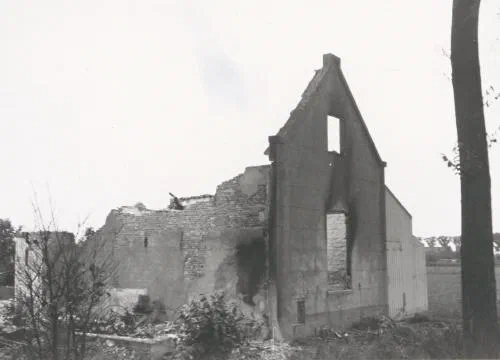
“Abandoned by everyone, he finally attempted, entirely on his own, to make his way from Dubbeldam to Dordrecht by a back road. In doing so, he was shot in the groin by a German soldier who had been standing behind a tree. He then either stepped off or fell from his bicycle and entered a nearby house. Moments later, a German armoured car appeared and set the house on fire. The residents managed to escape just in time, but my son perished in the flames.”
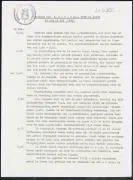
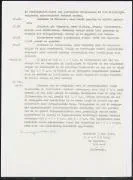
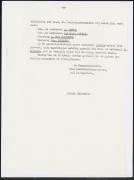
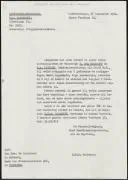
During his search for his son, Father Rom Colthoff was in contact with the secretary of the municipality of Dubbeldam. This secretary, Mr M.G. Rietveld, investigated the matter and established how Ensign Rom Colthoff had met his end. A quotation from his report reads:
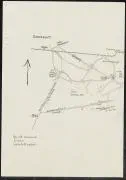
“At the request of the family, I conducted an investigation in the weeks after 14 May 1940 into the whereabouts or grave of Ensign M. Rom Colthoff of 2 R.W. After prolonged efforts and many inquiries in Dubbeldam, Dordrecht, and the surrounding municipalities, I finally obtained a lead around mid‑June 1940. I then learned that, during the days of fighting, a wounded non‑commissioned officer had reportedly fled into a house on the Achterweg in Dordrecht, near the border with Dubbeldam, and that he had taken his own life inside the house. The house had subsequently caught fire after being shelled, and the completely charred body of this NCO had later been removed by the Dordrecht police and buried in the municipal cemetery there. I then contacted the Dordrecht police, and it became clear that this account was indeed correct. At the same time, based on information provided to me by the father of Rom Colthoff and others, I was able to reconstruct the route the ensign had taken up to the final moments before his death. This route led unmistakably to the house in question on the Achterweg. I had also learned that many officers and NCOs had removed the insignia from their uniforms on the last day of fighting, making it entirely possible that the ensign—who wore a private tailored uniform—had been mistaken for a non‑commissioned officer. In cooperation with Police Inspector H.B. Brukker in Dordrecht, I then interviewed the two residents of the house on the Achterweg into which Rom Colthoff had fled. When shown two clear photographs of the ensign, both immediately and without hesitation recognised in the man depicted the soldier who had entered their home wounded on 13 May 1940. They further stated that their house had already been under fire from an armoured car at the time, forcing them to lie on the floor. The ensign, who was in despair, took his own life with his revolver in another room, despite their attempts to stop him. Shortly afterwards, the house was set ablaze, forcing the residents to flee and leave the body behind. Because he wore no insignia, they had initially assumed he was a non‑commissioned officer, but upon seeing the photographs, they recognised him without any doubt. The Dordrecht police had determined that the body had been completely charred by the fire and was entirely unrecognisable.
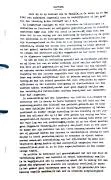
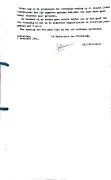
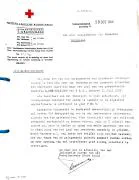
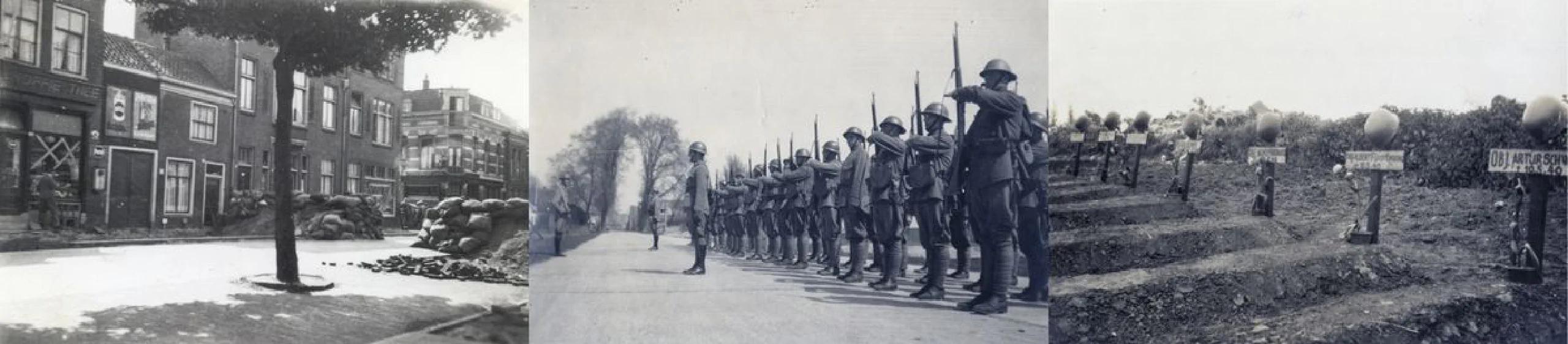
On 4 July 1940, an end was finally brought to all uncertainty. Ensign Rom Colthoff had been identified by the serial number of his pistol and through the investigation conducted by Mr Rietveld. He went missing during the night of 12 to 13 May 1940. His remains were found in the burned‑out house on the Achterweg, after which he was given a field grave in the garden. On 16 May 1940, he was reburied as an unknown soldier in the municipal cemetery in Dordrecht, in row 5, grave 9. After the war, on 22 October 1948, he was reburied once more, this time in row 3 – grave 10. There he rests to this day, beneath a stone bearing his name: M. Rom Colthoff, Res. Ensign 2‑I‑2 R.W.
To adopt a wargrave
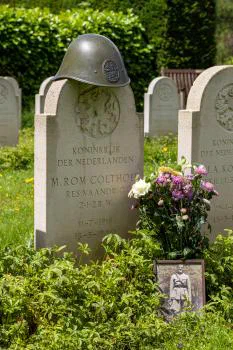
All across the Netherlands there are war graves. These may be Dutch war graves, but also the graves of Allied soldiers. In some cases, these war graves are eligible for adoption. Many schools adopt war graves, but it is also possible for private individuals to do so. Adopting a war grave means that the adopter visits the grave from time to time and places flowers there. It is also greatly appreciated when the adopter takes the time to learn about the history and the story of the fallen soldier. The website of the Dutch War Graves Foundation allows adopters to publish this story. There are no costs associated with adopting a war grave. If you would like to know more about adopting a war grave, please consult the website of the Dutch War Graves Foundation. Dutch War Graves Foundation - Adoption . For more information about the war graves in the Dordrecht region, I would like to refer you to the list of war graves in the Dordrecht area on this website. The list contains all war graves in the region, with additional references to the circumstances in which each soldier was killed. You can find the list here: Wargraves in Dordrecht and the area .