
Adoption grave Reserve Captain Jan Koolhaas
In remembrance of Reserve Captain Jan Koolhaas.
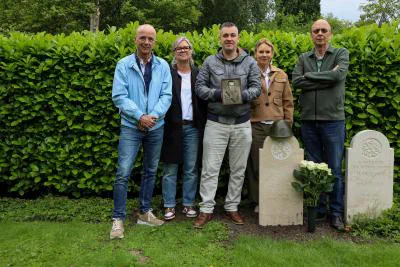
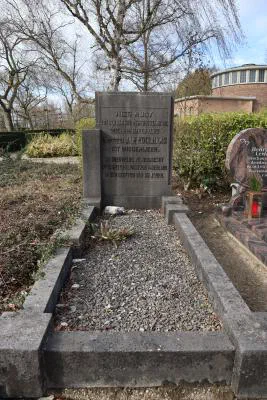
In the past year (March 2026), I adopted the war grave of Reserve Captain Jan Koolhaas at the general cemetery in Dordrecht. This adoption came about after I was invited by the captain’s grandchildren to attend the reburial, which took place in September 2025. Captain Koolhaas was one of the many servicemen whose stories I described in the book “Oorlogsgraven op het Eiland van Dordrecht”. In March 2024, I was contacted by Engel Koolhaas, the grandson of Jan Koolhaas. With the upcoming reburial in mind, Engel had several questions about the circumstances surrounding his grandfather’s death. As chance would have it, I was still actively working on my book at the time, which allowed us to exchange the necessary information quickly. Engel was also able to provide me with a beautiful photograph of Jan Koolhaas, which has been included in the book.
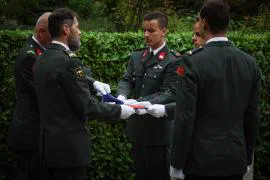
Not long after, I was giving a guided tour at the 1940–1945 Museum in Dordrecht, where I met Caroline Koolhaas, also a grandchild of Jan Koolhaas. This eventually led to an invitation from the grandchildren in June 2025 to attend his reburial, which was to take place in September 2025. And so it happened. On 18 September 2025, Reserve Captain Jan Koolhaas was reburied with military honors at the Field of Honour of the cemetery in Dordrecht. It was a special experience to be present. Because the grandchildren live quite far from Dordrecht, I decided to propose adopting the grave. This way, there would always be someone who could place flowers on behalf of the family from time to time and keep an eye on the condition of the grave. The Koolhaas family was very positive about this. In March 2026, I adopted the grave of Jan Koolhaas.
About Reserve Captain Jan Koolhaas
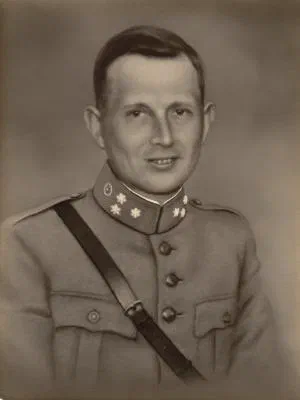
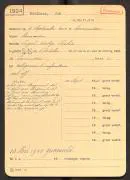
Jan Koolhaas was born on 11 September 1904 in Leimuiden. He came from a Reformed family. His parents were Bernardus Koolhaas and Neeltje Sophia Engel. Jan completed secondary education, followed by five years of H.B.S. (Higher Civic School). He became a grain trader by profession. On 16 May 1929, he married Alida Jozina Engel in Mijdrecht. The couple had six children: Bernhard, Johan Peter Engel, Jan, Jozina Alida Catharina, Reinder Jacob, and Neeltje Sophie.
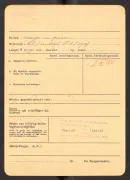
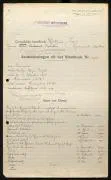
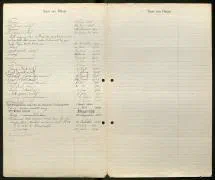
On 6 October 1924, Jan was enlisted as a regular conscript in the 4th Infantry Regiment. He belonged to the 1924 draft from Leimuiden and was selected for training as a reserve officer. On 24 June 1925, he was promoted to vaandrig (Ensign). He was then transferred to the Cyclist Regiment (Regiment Wielrijders), where he was promoted to reserve second lieutenant on 11 December 1925 and to reserve first lieutenant on 16 November 1929. On 1 March 1939, Jan was transferred to the 1st Cyclist Regiment, and on 24 August he was mobilised. On 30 October 1939, he was promoted to reserve captain where he would serve during the mobilization period and the wardays in May 1940.
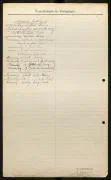
Service record of Captain Koolhaas
Below are the conscription card and the service record of Captain Jan Koolhaas.
The events during the days of war
During the mobilisation, Captain Jan Koolhaas was assigned to the 1st Company of the 2nd Battalion of the 1st Cyclist Regiment. He served as the company commander of this unit. At the outbreak of the war on 10 May 1940, the 2nd Battalion was stationed in Heeze, near Eindhoven. That same day, the march toward Fortress Holland began. The battalion advanced via Geldrop–Tongeren toward Woensel, and from there to Boxtel–Haaren–Uden. By the end of 10 May, they had reached Waalwijk and Drongelen, and around 01:30 during the night they arrived in Gorinchem. On 11 May, the battalion moved toward Bleskensgraaf and Oud-Alblas, and from there to Dordrecht, where it arrived around 01:00 on 12 May. The battalion had finally reached Dordrecht.
On 12 May, the Light Division, of which 1-II-1 R.W. was a part, received the order to clear the Island of Dordrecht of German forces. A plan was drawn up consisting of three phases. Each phase had its own objective line that the advancing cyclist battalions were to reach. Jan Koolhaas’s battalion, II-1 R.W., was under the command of Major Kloppenburg and formed the right‑hand group. III-2 R.W., under Major Van Bosch, formed the central group, and I-2 R.W., under Major Eggens, the left‑hand group. All cyclist battalions, supported by troops of the Kil Group, were to advance side by side toward the various objective lines.
- Objective Line A: the railway line between Zwijndrecht and Sliedrecht
- Objective Line B: the east–west road between Kop van ’t Land and Wieldrecht
- Objective Line C: the southern edge of the Oude and Nieuwe Beerpolder – Louisapolder dike – Noorderdiep
Only once all troops had established contact with one another would the groups advance to the next objective line.
On 12 May, Jan Koolhaas’s battalion deployed in the direction of Krispijn, advancing through the sector between the railway bridge and the tunnel. A readiness position was taken up along the Krispijnseweg, and the men began searching the houses. Around 14:30, the cyclists positioned on the eastern side of the Krispijnseweg came under heavy fire from German paratroopers of I./FJR 1. During the ensuing exchange of fire, one cyclist was killed and six men were wounded. Captain Koolhaas was severely wounded when he and several of his men attempted to cross the Krispijnseweg from east to west near the Juliana Church, hoping to establish a better starting position. He was dragged to safety by conscripted soldier H.P. van Veen, who later gave the following statement:
“I had moved further forward — then went back — and saw Captain Koolhaas lying wounded when I jumped over the little wall of a garden opposite the church to take cover. By doing so, I ended up on the grassy patch where the Captain was lying. Before that moment, I had not heard him because of the noise. The Captain was lying on his back, groaning, and said: “Help me.” When I stood there with the Captain in my arms, I came under fire and had to seek cover behind the small walls while carrying him. I had to force the door of the house where I carried him — by kicking it several times — I could not ring the bell. I carried him inside by myself. I saw no other people; they had taken cover. Inside the house were an elderly man and woman. I laid the Captain on the runner on the floor. He was bleeding heavily. He asked me to warn a doctor. I took a bicycle — the road was under fire — and under the tunnel I alerted a Red Cross doctor.
Only around 19:00 did a doctor manage to reach the wounded captain. Jan Koolhaas was taken to the Private Nursing Home (Particuliere Ziekenverpleging) on Ceramstraat in Dordrecht. There, on 13 May 1940, he succumbed to his injuries.
Posthumously Decorated
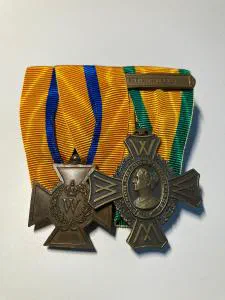
Captain Koolhaas was posthumously awarded the Bronze Cross for his bravery: “On 12 May 1940, he led his company with great courage in street fighting in Dordrecht, during which he was killed in action.”
The medals, neatly mounted, can be seen here in the photograph. On the left is the Bronze Cross, on the right the War Commemorative Cross with the May 1940 clasp.
Reburial – September 2025
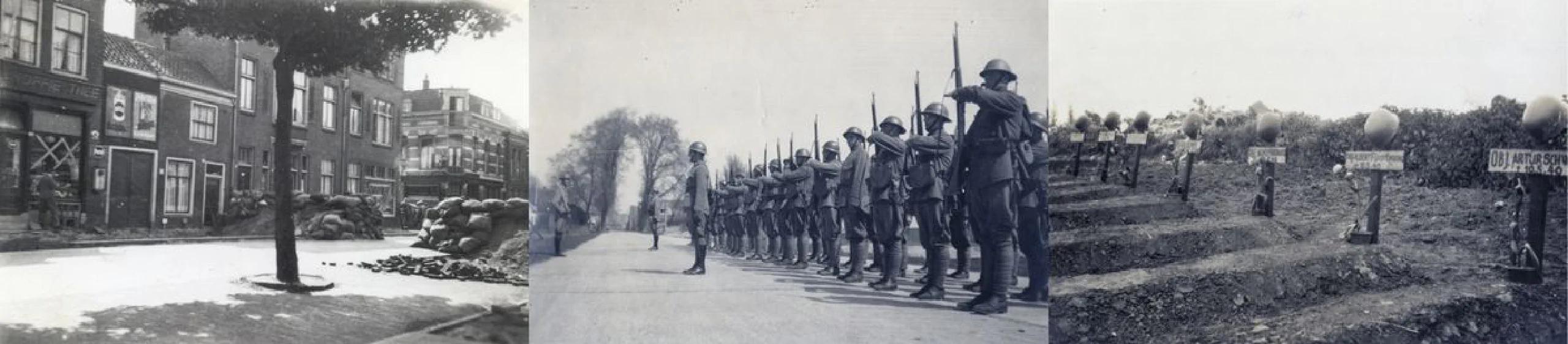
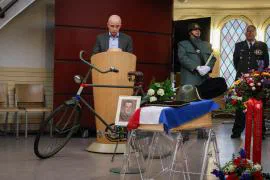
Captain Koolhaas was buried in May 1940, just like many of his fallen comrades, in the mass grave at the municipal cemetery in Dordrecht. He was laid to rest in row 1, grave 23. On 30 May, however, at the request of his relatives, he was reburied in a private grave in section N – plot 3 – grave 19. He remained there for many years, until the grave rights expired in 2025. Jan Koolhaas was then exhumed by the Recovery and Identification Service of the Royal Netherlands Army. In consultation with the captain’s family, it was decided that he would be reburied once again in Dordrecht. On 18 September 2025, he was reburied with full military honours and in the presence of a large gathering. He has been given a permanent resting place at the Field of Honour (Erehof) of the cemetery in Dordrecht, in section N – row 5 – grave 13.
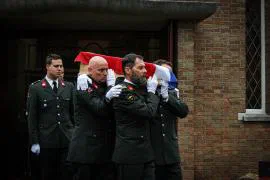
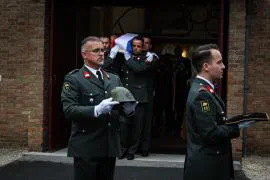
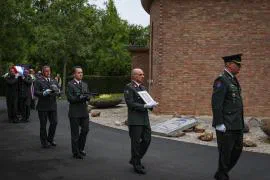
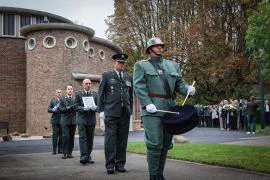
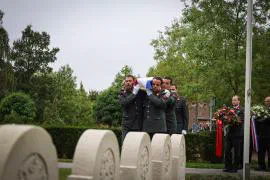
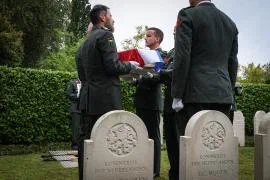
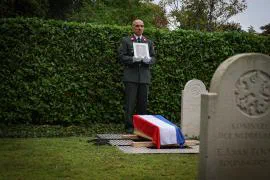
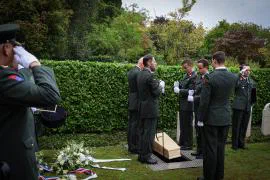
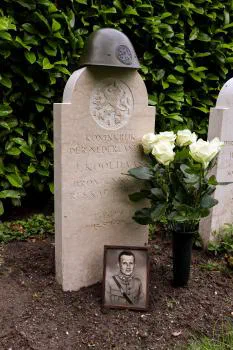
On 26 May 2026, the headstone of the Dutch War Graves Foundation was placed at the grave of Jan Koolhaas. On 14 June, I visited the Field of Honour together with the family to see Jan’s now complete grave.
To adopt a wargrave
All across the Netherlands there are war graves. These may be Dutch war graves, but also the graves of Allied soldiers. In some cases, these war graves are eligible for adoption. Many schools adopt war graves, but it is also possible for private individuals. Adopting a war grave means that the adopter visits the grave from time to time and places flowers there. It is also greatly appreciated when the adopter takes the time to learn about the history and story of the fallen soldier. On the website of the Dutch War Graves Foundation, it is possible to publish this story. There are no costs associated with adopting a war grave. Would you like to know more about adopting a war grave? Then consult the website of the Dutch War Graves Foundation – Adoption .
For more information about the war graves in the Dordrecht region, I refer you to the list of war graves in the Dordrecht area on this website.The list contains all war graves in the Dordrecht region, with additional references to the circumstances in which each soldier was killed. You can find the list here: Wargraves in Dordrecht and the Area .