
Liberation Photographs of Jan Los – Domestic Armed Forces
On this page you will find the photographs from the estate of Jan Los of Zwijndrecht. These photographs were donated by Mrs. Hennie Los, daughter of Jan Los.
Jan Los was born on 17 December 1920 in Zwijndrecht. His parents were Adrianus Los and Geertrui van Driel. Jan attended six years of Primary Education, followed by one year of Extended Primary Education. After that, he completed two years at the Evening School for Commerce. By profession, Jan was a greengrocer. He lived at Westelijke Parallelweg 106 in Zwijndrecht.
On 23 October 1939, he was called up as a regular conscript of the 1940 draft, serving in the 1st Regiment of Bicycle Infantry. He served during May 1940 and took part in the fighting at the bridge over the Noord near Alblasserdam.
“During the attack by the Germans from Ridderkerk on the bridge over the Noord, he was involved in the defence at Alblasserdam and narrowly escaped with his life, as a bomb exploded very close to him. After withdrawing to Dordrecht, he was positioned on the balcony of the courthouse in ’t Steeg over Sloot in order to fire upon the Joris Bridge, so as to possibly halt the Germans there.”
On 27 May 1940, Jan was granted extended leave, having survived the war days in May 1940.
During the war, he did not remain idle. He became a member of the Domestic Armed Forces in Zwijndrecht, in Region 14, South Holland South, District Dordrecht, serving in the 4th Company. He was a member from 5 September 1944 until 7 June 1945. During the war, Jan was involved in various dangerous activities. For example, he smuggled weapons across the Zwijndrecht bridge, which was guarded by German soldiers.
1. Jan Los holding a Sten gun – Liberation of Zwijndrecht
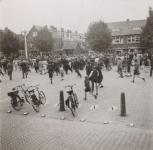
2.A running crowd at Raadhuisplein in Zwijndrecht during the liberation.
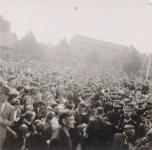
3.Celebrating crowd at Raadhuisplein in Zwijndrecht during the liberation.
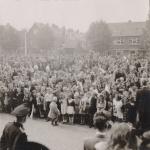
4.Celebrating crowd at Raadhuisplein in Zwijndrecht during the liberation.
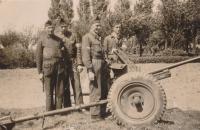
5.Members of the Domestic Armed Forces with a German PAK anti‑tank gun after the liberation.
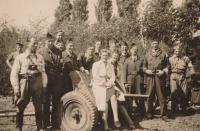
6.Members of the Domestic Armed Forces with a German PAK anti‑tank gun after the liberation.
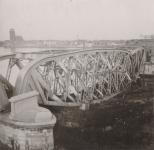
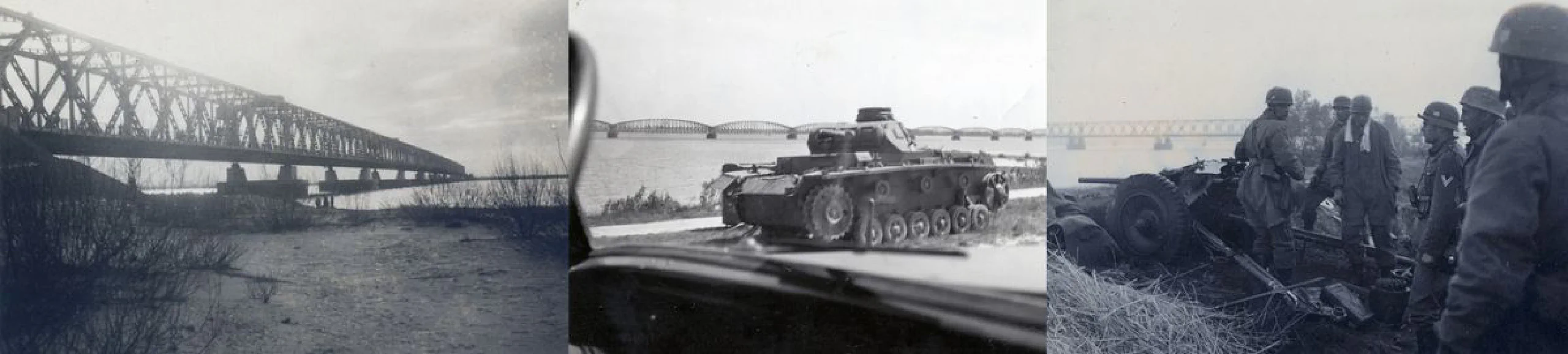
7.The blown‑up railway bridge of Zwijndrecht after the liberation.