
Moerdijk Bridges Destroyed
On 17 September 1944, Operation Market Garden began in the Netherlands. This operation consisted of airborne units tasked with securing key bridges along the advance route toward Arnhem, as well as ground forces that would push through to Germany using the captured bridges. The operation ultimately failed, as the bridge at Arnhem proved to be a bridge too far. However, large parts of the province of North Brabant were liberated—though under heavy fighting—by the Allied forces.
On 20 October 1944, Operation Pheasant began, during which British, Canadian, Polish, and American troops moved to liberate the remaining parts of western and central Brabant. As the Allies approached the village of Moerdijk, the urgency for the Germans to move as much heavy equipment and as many troops as possible across the bridges increased. Approximately 400 German soldiers remained behind to defend the village and give the remaining units time to evacuate across the bridge into Fortress Holland.
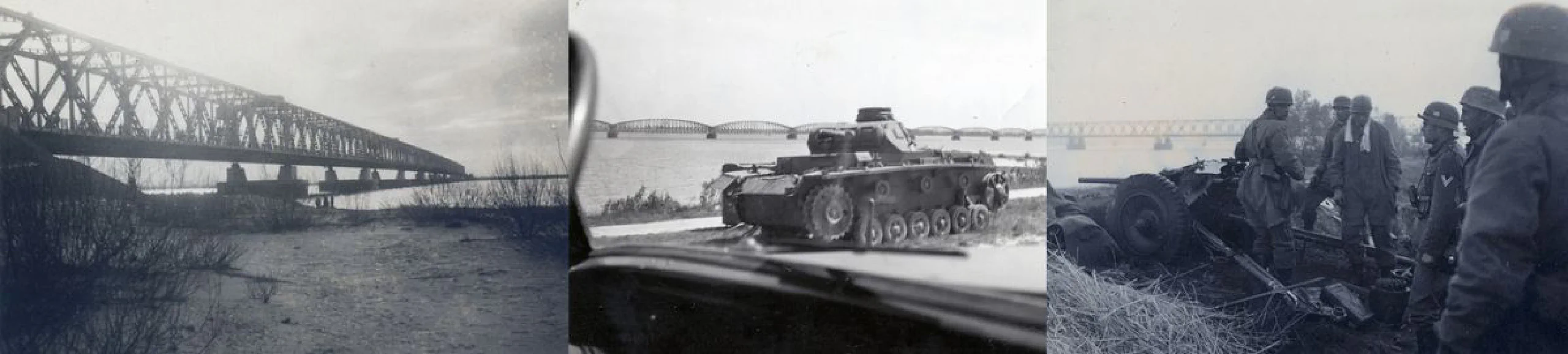
On 6 November 1944, the road bridge at Moerdijk was blown up, destroying several bridge segments to prevent the Allies from crossing. On 17 November, the railway bridge followed. The remnants of the 400 German troops on the far side of the bridge surrendered shortly afterward.[^1]
The photographs shown below depict the destroyed bridges over the Hollands Diep. They were almost certainly taken after the liberation. The German fortifications on the Willemsdorp side, also visible in the images, were likely either destroyed by the Germans themselves or heavily damaged by Allied artillery fire. These are unique images, as photographs of the bridges after their destruction are relatively rare—unlike the many snapshots German soldiers took of the bridges earlier in the war.
-[^1]: Source: WO II: Bevrijding Canon van Moerdijk en Museum19401945.nl