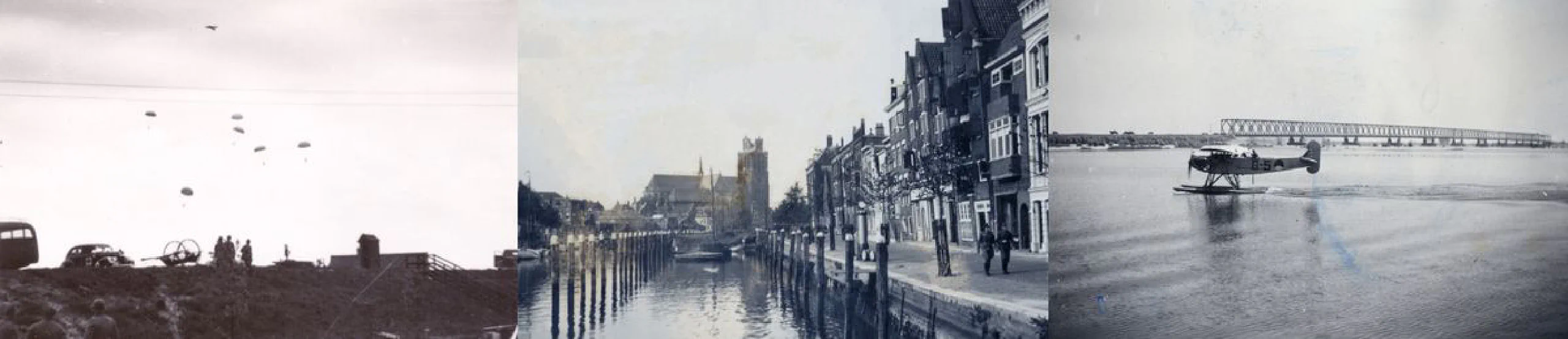
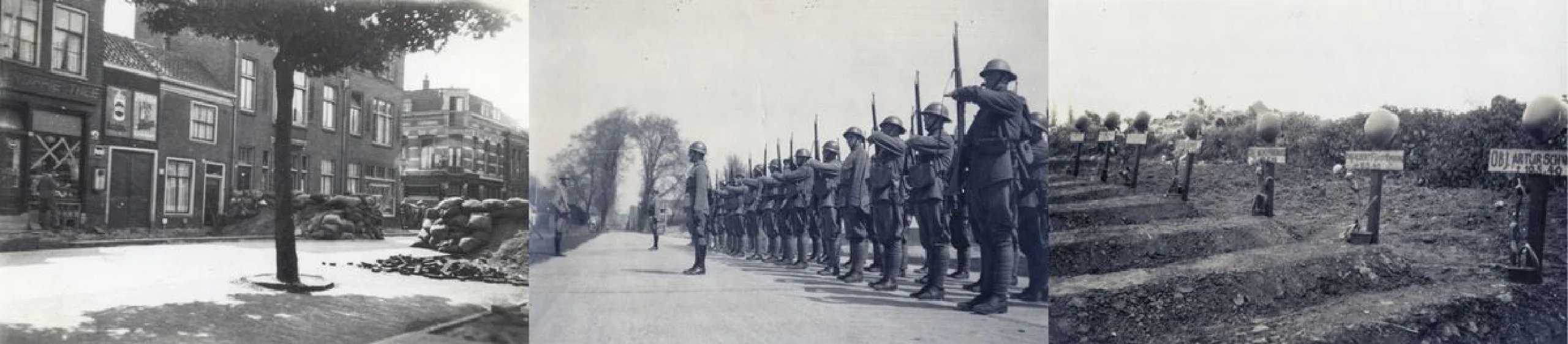
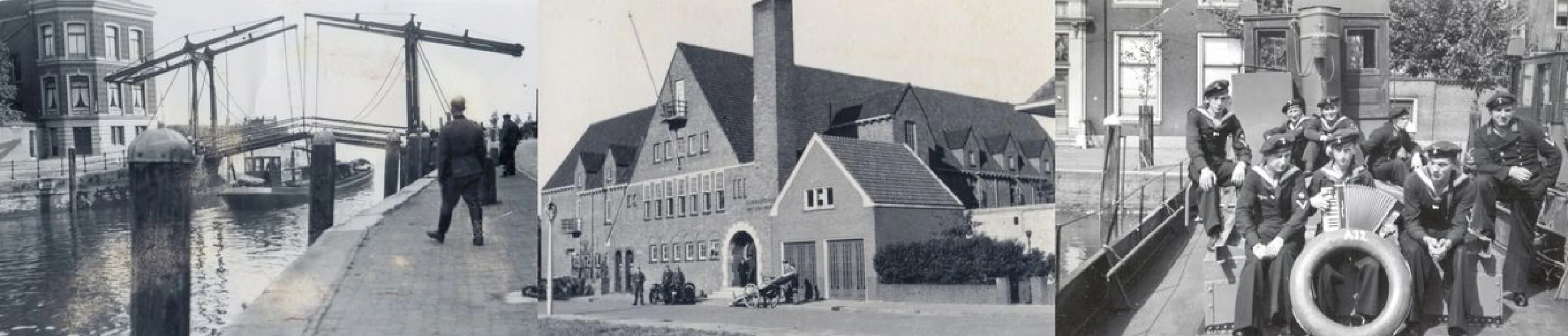
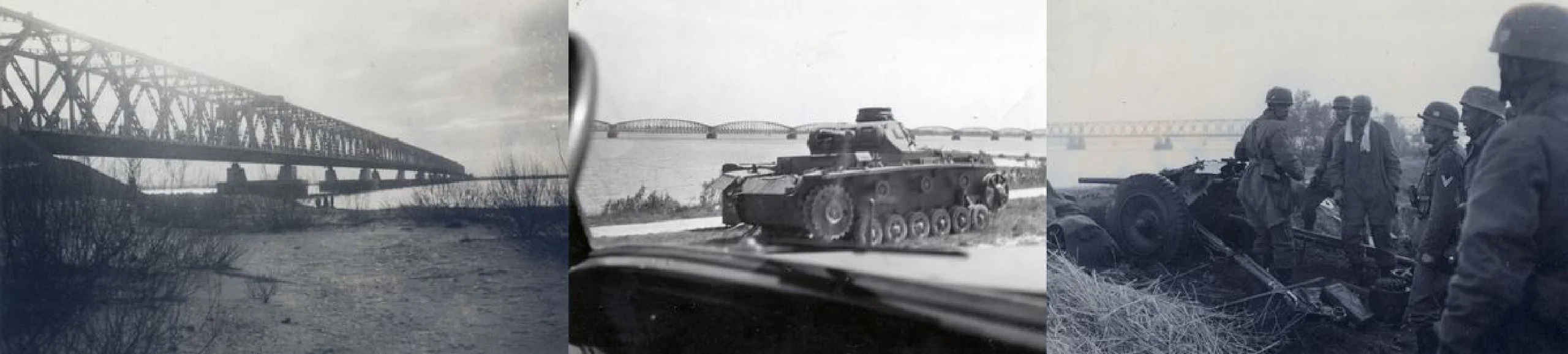
War pocket book and Documents Willem Adriaan Fop Smit from Alblasserdam
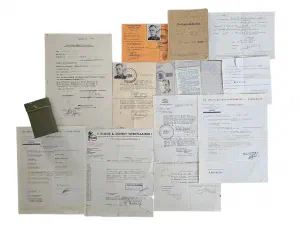
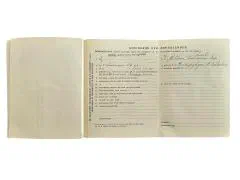
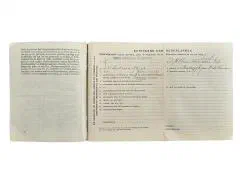
Below you can see the war pocket book of Mr. Willem Adriaan Fop Smit. Willem was born on 13 June 1914 in Kinderdijk, municipality of Nieuw Lekkerland. His parents were Willem Smit and Cornelia Willemina van Aken. After attending the H.B.S. for five years, he was enlisted on 3 September 1934 in the 7th Artillery Regiment as a regular conscript from the municipality of Alblasserdam. On 1 January 1938, Willem was appointed and commissioned as a reserve second lieutenant of Special Services with the Volunteer Landstorm Corps, Vessel Service. On 12 April 1939, Willem was transferred to Military Aviation. However, he was reassigned to the Vessel Service, because during the events in May 1940, Willem served as commander of the Vessel Service detachment, Lek group. The quarters of this detachment were located in Fort Vreeswijk near Utrecht. During May 1940, the detachment used its vessels mainly for reconnaissance and security tasks. 1 - 2
Willem came through the May days unharmed. After the liberation, he served as a first lieutenant with the authority troops, although his service record does not indicate where or for how long. After his time with the Military Authority, Willem was assigned to the Army Maritime Engineers Regiment on 29 October 1948. On 1 May 1950, he received an honourable discharge due to infirmities.
The war pocket book
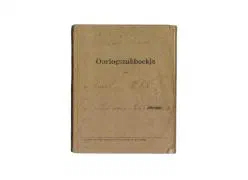
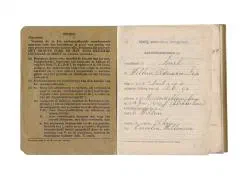
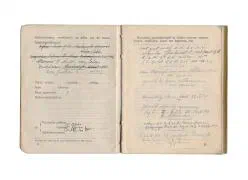
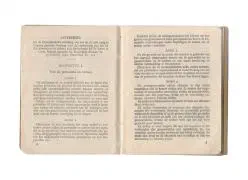
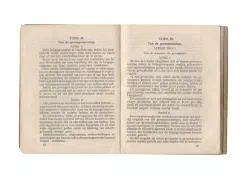
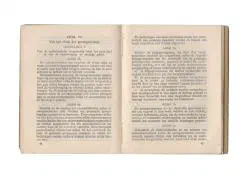
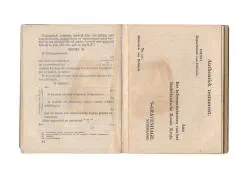
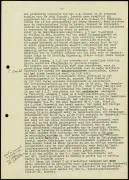
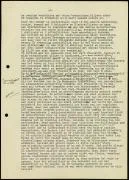
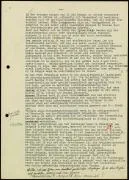
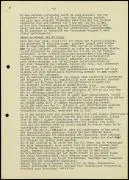
Combat Reports Detachment Vessel Service, Lek Group – 409 Combat Reports NIMH
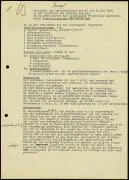
In the combat reports below, you can read (in Dutch) more about the actions of the Detachment Vessel Service, Lek Group, which was under the command of Willem Adriaan Fop Smit.
Mobilization documents
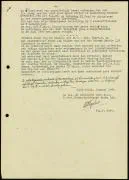
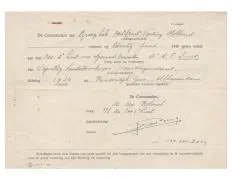
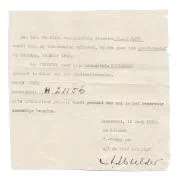
In addition to the wartime booklet, there is also a Groot Verlofpas (Major Leave Pass). Willem was granted Major Leave on 20 June 1940 by reserve first lieutenant J. van den Berg. There is also a document showing that Willem was permitted by his commander to return to Kinderdijk using his private car. With this document, Willem was granted permission to travel from Vreeswijk to Kinderdijk in his private vehicle, a Ford with registration number H21156. The permission was valid only if Willem used the petrol still available in the reservoir. The authorization was issued by Colonel A. Mulder, Chief of Staff of the Lek Group
identification documents of the Military Authority and declaration
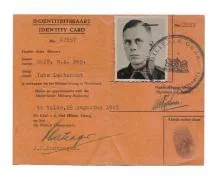
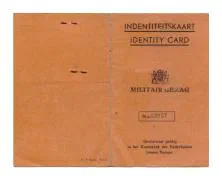
Identity card Among this collection of documents is also an official identity card of the Military Authority, dated 29 August 1945, issued shortly after the liberation. In the centre-right section, a passport photograph of Willem F.A. Smit is affixed, bearing a stamp of the Military Authority. The text states that First Lieutenant W.A. Fop Smit is employed by the Military Authority, the temporary military administrative organisation that supported civil governance immediately after the war. At the bottom appears the signature of Major J.H. Houtzager, Military Commissioner of the Dordrecht district, which grants the document its formal validity. On the right is also Willem’s own signature.
Military pass
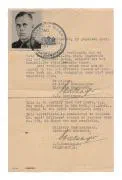
The second document is an official military pass from Dordrecht, dated 29 August 1945, issued shortly after the liberation. In the upper left corner, a passport photograph of Willem F.A. Smit is affixed, bearing a stamp of the Military Authority. The text states that First Lieutenant W.A. Fop Smit belongs to the Royal Netherlands Army and is assigned to the Military Authority, the temporary military administrative organisation that supported civil governance immediately after the war. Because his official officer’s service booklet, number 439, was not available, this pass served as a substitute identification document. At the bottom appears the signature of Major J.H. Houtzager, Military Commissioner of the Dordrecht district, which grants the document its formal validity.
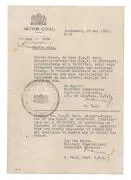
Declaration of the Military Authority The third document is an official declaration from the Military Authority in Dordrecht, issued on 20 May 1945, shortly after the liberation. It is a written authorization stating that Willem A.F. Smit, deputy director of the E.M.F. in Dordrecht, is travelling for urgent matters of national importance. The text emphasizes that he holds a valid identity card and that both military and civil authorities must provide him with all possible assistance during his journey. The document bears the stamp of the Military Authority and is signed by S. Valk, captain of the Royal Netherlands Army, who signs on behalf of the Major and Military Commissioner of the Dordrecht district. The English translation at the bottom makes clear that the document was intended to be understood by Allied authorities as well.
The Military Authority was the temporary military governing power that, immediately after the liberation, was responsible for restoring order and administration in the Netherlands. Because the police, mayors, and distribution services often were not functioning, the Military Authority took charge in liberated areas. Under Lieutenant General Kruls, it ensured security, food distribution, the arrest of collaborators, and the re‑establishment of civil administration. In Dordrecht, this responsibility lay with Military Commissioner J.H. Houtzager, who also coordinated the deployment of the Internal Armed Forces. The Military Authority remained active until the regular government was functioning sufficiently again and was then gradually dissolved.
Personal identity card and other documents
Among the collection of documents is also the personal identity card of Willem Adriaan Fop Smit, along with several documents from the wartime period.
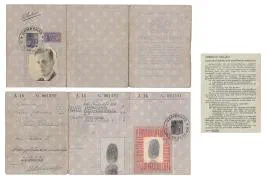
Personal identity card The identity card was issued on 2 September 1941 in the municipality of Alblasserdam. Willem was born on 13 June 1914 in Nieuw‑Lekkerland. On 20 August 1945, he moved to Burgemeester Jaslaan 6 in Dubbeldam. Included with the identity card is a small leaflet listing the obligations for a holder of a persoonsbewijs. A persoonsbewijs was the mandatory identity document for everyone aged fourteen and older in the Netherlands during the German occupation. It was introduced in April 1941 and had to be carried at all times. The document contained a passport photograph, name, address, date of birth, occupation, a unique registration number, and a fingerprint. The occupying forces used it to control the population, track movements, and carry out raids more efficiently. The persoonsbewijs was difficult to forge due to its combination of paper type, stamps, perforations, and the fingerprint, yet the resistance still developed methods to create forged copies or manipulate existing documents. After the war, it remained in use for a short period, but quickly lost its function once normal civil administration was restored.
Vorläufiger Rückstellungsschein
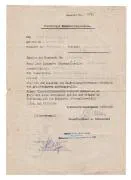
This document is a Vorläufiger Rückstellungsschein from January 1945, issued by the Wehrmacht Commandant’s Office in Dordrecht. It concerns a provisional exemption: a written declaration stating that Willem A.P. Smit, born in 1914 and residing in Kinderdijk, was temporarily exempted from deployment for German labour service. The form lists his personal details, the number of his Dutch identity card (the Kennkarte / persoonsbewijs), and his function: according to his papers “company manager,” in reality director of Machinefabriek Smit & Co. in Kinderdijk. The German authorities recorded that he worked for the Oberwerfstab Dordrecht, which fell under the Kriegsmarine, explaining why his labour was considered “service of importance.” The exemption was initially valid until 31 March 1945, but a stamp on the document shows that it was later extended to 31 May 1945. The document bears several official stamps of the Wehrmacht Commandant’s Office Dordrecht and the Kriegsmarine Dordrecht, as well as the signature of the Oberstleutnant of the Wehrmacht Commandant’s Office Dordrecht.
Gemeindeverwaltung Nieuw Lekkerland
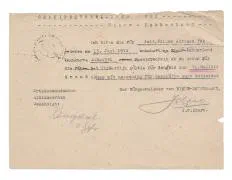
This document is an official Passierschein request from the final months of the German occupation. It was drafted by the municipality of Nieuw‑Lekkerland and addressed to the German occupation authorities. The mayor states that Willem Adriaan Fop Smit, born in 1914 and residing in Nieuw‑Lekkerland, possesses a Kennkarte with number A16‑1591 and must regularly travel to Rotterdam for business purposes. For that reason, the municipality requests that he be issued a passage permit for the ferry at Kinderdijk, valid until 31 May 1945. At the bottom appears the approval of the Ortskommandantur Alblasserdam, including a signature. The document is also signed by the mayor of Nieuw‑Lekkerland, Mr. J.C. Koert.
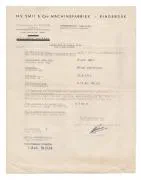
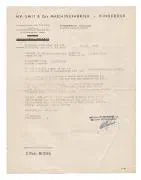
Bescheiningung Smit & Co’s machinefactory This document is an official declaration from Smit & Co’s Machinefabriek N.V. in Kinderdijk. It is bilingual — Dutch and German — because it was intended to be valid for both Dutch and German authorities. The director of the factory states that W.A.F. Smit, born in 1914 and residing in Nieuw‑Lekkerland, holds an identity card with number A 16/001591 and has been issued a special Ausweis. This Ausweis granted him exemption from labour deployment (forced labour) and exemption from being taken as a prisoner of war — something granted only to individuals considered essential for the German war industry or related services. The document lists the number of this exemption Ausweis (5099 G) and notes that the original is kept in custody by the factory’s director. At the bottom appears the signature of the director, who in this case is the same person: W.A. Fop Smit.
Declaration of N.V. Smit & Co’s Machinefactory This document is an official company declaration from N.V. Smit & Co’s Machinefabriek in Kinderdijk, drawn up in July 1944, in the midst of the German occupation. It is a bilingual document — Dutch and German — because it was intended to be recognised by both Dutch institutions and the German authorities. The declaration confirms that W.A.F. Smit, born on 13 June 1914 and residing in Nieuw‑Lekkerland, is employed at the factory as director/manager. His identity card number is listed. The document bears the official letterhead of the machine factory, including contact details and a reference to the “Hollandia engines,” an important product line. At the bottom appears the signature of Willem F.A. Smit on behalf of the management, along with the company stamp.
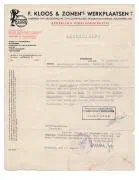
Declaration from F. Kloos & Sons Workshops This document is an official authorization issued by F. Kloos & Sons Workshops N.V., dated 14 August 1940, from the early months of the German occupation. The statement confirms that W.A.F. Smit, assembly supervisor at the company, is tasked with repair work on three important Maas bridges: Venlo, Roermond, and Mook. Because these bridges formed strategic infrastructure, access was strictly regulated. The declaration formally grants Smit permission to enter these bridges and carry out work there on behalf of Rijkswaterstaat and the Dutch Railways. At the bottom appears the signature of the management of Kloos & Sons, followed by a separate German section from the Ortskommandantur Roermond, which confirms the same authorization. This German approval was necessary because the bridges were under military supervision.