Dordrecht - foto 1 Dordrecht - foto 2 Dordrecht - foto 3 Dordrecht - foto 4 Dordrecht - foto 5 Dordrecht - foto 6
Home » Others » Warpocketbooks and identificationtags

Warpocketbooks and identificationtags

Identification tag of Hendrik Louwman - Dordrecht

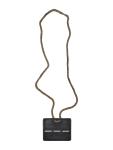
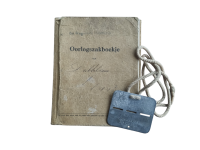
In the photos below, you will find the military identification tag of Mr. Henrik Louwman from Dordrecht. Hendrik Louwman was born on April 26, 1914, as the son of Willem Louwman and Dirksje van den Berg. He was a professional house painter and was called up as a conscript on October 4, 1934, to serve in the 6th Infantry Regiment in Breda. After his initial service, he returned multiple times for training exercises.

Dogtag Hendrik Louwman Dordrecht 6 RI

On August 29, 1939, he returned as part of the extraordinary call-up for general mobilization. It is unclear where his mobilization destination was as his exact unit is not known. However, his service record indicates that he was still mobilized during May 1940, as he was released from captivity on June 10, 1940. The identification tag you see below belonged to his wartime identity card and was worn around the neck. It is an earlier model that was still handwritten with acid. The later models were stamped and therefore much more legible. The identification tag, also known as the “dog tag” or “fallen soldier tag,” bears the name of the soldier, date of birth, and place of birth. In many cases, the military unit was also included on the identification tag. If the soldier was killed in action, the tag was broken. The portion of the tag attached to the string remained with the soldier, while the lower portion of the tag, along with the war pocket book, was sent to the information bureau of the Red Cross. This tag is still intact and virtually in its original condition. However, someone later traced his birthdate with a pen.

War Pocket Book and Identification Tag of Bastiaan van Lelieveld

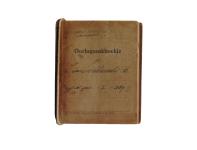
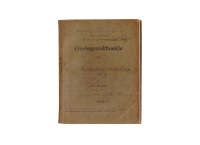
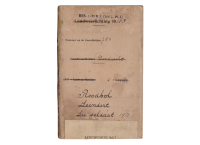
Below you can see the war pocket book and the identification tag of Bastiaan van Lelieveld. Bastiaan was born on September 9, 1911 in Dordrecht. His parents were Cornelis van Lelieveld and Jozina Cornelia van Dooren. Bastiaan attended the 7th grade of primary school and then spent 3 years at the H.B.S. (Higher Ciitizen school). He worked as an electrician. On June 16, 1931, Bastiaan was called up as a regular conscript of the 1931 draft from Dordrecht. He was assigned to the Engineer Corps. On November 28, 1931, he was granted leave. On September 9, 1935, he returned for a refresher exercise and then went on leave again on September 25. On July 8, 1937, he returned for another refresher exercise and went on leave on July 24. On October 1, 1938, Conscript private van Lelieveld was transferred to the 1st Engineer Corps. On April 11, 1939, he returned from leave. The war pocket book and identification tag were issued upon enlistment. The soldier always carried them. The text on the identification tag was etched with acid.

War Pocketbook and Identification Tag of Pieter Buitendijk

image

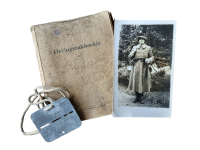
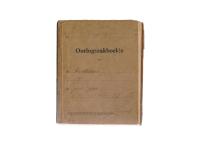
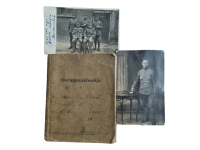
This is the war pocketbook and identification tag of Pieter Buitendijk. Pieter was born on September 1, 1918, in Zwijndrecht. His parents were Jan Buitendijk and Barbera Verveer. Pieter attended the 7th grade of elementary school. He worked as a factory laborer. On April 5, 1938, Pieter was called up as a regular conscript of the 1938 draft from Zwijndrecht. He was assigned to the 2nd Regiment of Hussars. On February 24, 1939, he received the qualification: exceptionally skilled hand grenade thrower. On April 3, 1939, he was transferred to 1-4 R.H. On July 1, 1939, he went on extended leave, and a day later he was reassigned to the 2nd Regiment of Hussars. On August 29, 1939, conscript soldier Buitendijk was recalled due to the General Mobilization. On December 18, 1939, Pieter Buitendijk was appointed as a conscript trumpeter.

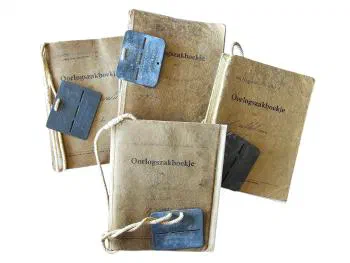
He served as a soldier during May 1940, although it is unclear where. The 2nd Regiment of Hussars was deployed near Dordrecht in May 1940. It is therefore likely that Pieter Buitendijk fought in Dordrecht during May 1940. On May 25, 1940, he went on extended leave. In the 1930s, the war pocketbook was a standard part of the personal equipment of Dutch conscripted soldiers. The booklet was issued upon enlistment and served as an identification and registration tool. It contained personal information such as name, date of birth, address, religion, marital status, occupation, and the names of the soldier’s parents. In addition, it included military details such as regiment, draft year, clothing sizes, gas mask size, and vaccination records. The pocketbook was carried during refresher exercises and mobilization periods. The identification tag, often issued together with the pocketbook, was a zinc tag worn around the neck. At that time, the tag was often etched with acid rather than stamped, which resulted in less durable legibility. Later, the tags were stamped. The tag usually contained the soldier’s name, date of birth, place of birth, and sometimes the unit. In the event of death, the tag was broken in two: the upper half remained with the body, while the lower half, together with the pocketbook, was sent to the Red Cross or the information bureau.