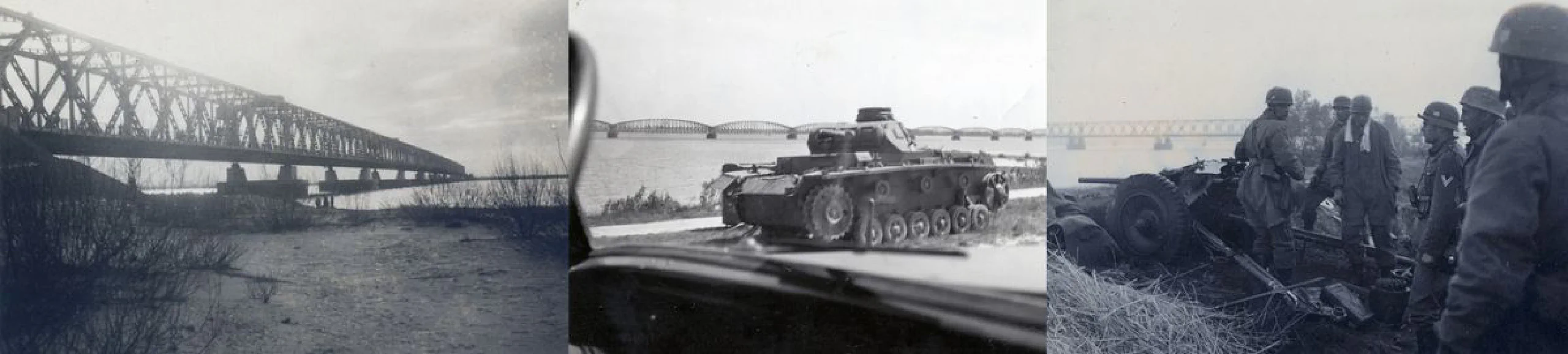
Dordrecht - foto 1 Dordrecht - foto 2 Dordrecht - foto 3 Dordrecht - foto 4 Dordrecht - foto 5 Dordrecht - foto 6
Home » Others » Military and Mobilization

Military and Mobilization

On this page, you will find various items related to the military and mobilization category that do not fit into the categories of photos or documents. This can include identification tags, uniforms, and other related items.
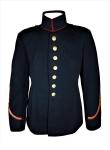
Dress Uniform Jacket - Koenraad de Munter
Here you will find the dress uniform jacket of Koenraad de Munter.

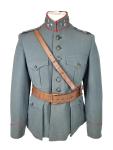
Het gala- uniformjasje van Sergeant Koenraad de Munter uit Dordrecht uit de mobilisatieperiode.

Koenraad de Munter was born on June 8, 1915, in Dordrecht. He is one of the sons of Anthonie Jacobus de Munter and Adriana Langeweg de Munter. He grew up in Dordrecht and became a teacher after completing his education at the teacher training school. On December 4, 1934, he was enlisted as an ordinary conscript in the 6th infantry regiment in Breda. There, he underwent non-commissioned officers training. On March 16, 1935, he was promoted to corporal, on July 20 to provisional sergeant, and on September 4 to sergeant. On September 3, 1935, he took a long leave and did not return until April 9, 1938. At that time, he still resided at 36 Houweningestraat in Dordrecht. In the same year, on July 30, he was appointed as a sergeant-capitulant for a period of six years. In August, he decided to move to Breda, presumably to live closer to his barracks. [^1]

On April 11, 1939, he was called up as a B.O.U.V. (Extraordinary call-up for external security) and assigned to I-6th Border Battalion. This company, under the command of 1st Lieutenant M.L.G. Brogtrop, had its base in Princenhage near Breda. In the early morning of May 10, 1940, the received orders to destroy various objects, which was the intended role of the Border Battalions. Around 6:00 am, the order was given to advance towards Moerdijk to engage the German paratroopers. After several battles, it became clear that it was not possible to recapture the Moerdijk Bridgehead without reinforcements and heavy weapons. Subsequently, the battalion withdrew towards Wouwse Plantage and eventually to Antwerp. It was there that the war was over for the Netherlands.[^2]

Military Record K. De munter

image
Sergeant de Munter emerged unharmed from the events of May 1940. After the events of May 1940, he went on long leave on June 3, 1940. In November 1940, he performed duties with the Dutch Reconstruction Service ( Nederlandse Opbouw Dienst ) at the Achterberg near Rhenen. This reconstruction service was established on July 15, 1940, by Reich Commissioner Seyss-Inquart as employment for many Dutch soldiers who were unemployed after the surrender. In Rhenen, Koenraad met his future wife, Angenieta ter Haar, and they got married on October 10, 1942 when he was 27 years old. He then lived in Rotterdam between February and November 1942, where he worked as a stationmaster for the Dutch National Railways. After that, he returned to Dordrecht and moved back to 36 Houweningestraat on November 19, 1942. This marked the return of the soldier from Dordrecht. Koenraad de Munter eventually resumed his career as a teacher, first in primary education and later in special education in Gorinchem. He was officially discharged from military service on October 1, 1955.

This photo of Sergeant de Munter was kindly provided by Mr. Bert-Jan Dierink from https://https//www.facebook.com/bertjansmuseum. [^4]

Dress uniform Sergeant de Munter

Below you can see the photos of Sergeant de Munter’s gala jacket. The gala uniform was worn during official events, as well as during mourning and wedding ceremonies. The dress jacket shown below is one of the infantry uniforms. The complete ensemble would have consisted of a black gala cap, the jacket and trousers, and a pair of neat shoes. Only the jacket of Sergeant de Munter has survived, with his name written on a label inside one of the pockets. Truly a piece of Dordrecht’s history!

The jacket was manufactured in Breda. The rank distinction insignia in the form of “banana peels” indicate that it is the jacket of a Sergeant. The black color and red piping without any further distinguishing marks clearly indicate that it is a Dress Jacket for an infantry military personnel. The name label inside confirms that this was Sergeant de Munter’s jacket. The jacket is in excellent condition.  

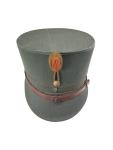
Officer’s kepi Jaap Elias B.Vest Dordrecht

Below you can see a grey-green kepi for an officer of the pre-war Dutch army. The kepi was an official headgear for Dutch military personnel until 1931. After that, the side cap (kwartiermuts) was commonly worn. In many cases, the kepi continued to be worn depending on the unit. [^5]

The grey-green kepi had different variations for various military units. There were also distinctions made between the kepi for enlisted personnel and non-commissioned officers, the kepi for officers, and the kepi for senior officers. The kepi for enlisted personnel and non-commissioned officers featured two piping stripes of a specific color. These colors indicated the branch or arm of service the soldiers belonged to. For example, blue represented infantry, red represented artillery, and there were other colors as well. The kepi for officers had two gold piping stripes, while the kepi for senior officers had three gold piping stripes. Additionally, each kepi was adorned with either the Dutch lion emblem or a regimental number.

The latter makes it difficult to associate a specific unit with the kepi below. What makes this kepi particularly special is the fact that it has a name written on it:

“Jaap Elias” Dordrecht B.Vest.

The above photos clearly show the two gold piping stripes, indicating that this kepi is an officer’s kepi. The regimental number is 1, which could potentially refer to the 1st Infantry Regiment or the 1st Artillery Regiment, for example. I have tried to research the name Jaap Elias, but so far, I have found no results. He is not listed in the name and rank records of the Royal Army, although it’s possible that these records are not complete. The bottom two photos are detailed shots of the sides of the kepi. The holes that you see on the side are ventilation holes. The gold piping stripes and the chin strap, attached on both sides with lion buttons, are clearly visible.

Below are some detailed photos of the kepi and the names written inside. These photos show the regimental number, cockade, and chin strap clearly. Inside the kepi, it appears that the name Jaap Elias is written with a pen. Additionally, the sweatband bears the inscription J. Elias Dordrecht B.Vest.

Based on the available information, it is likely that this kepi belonged to a gentleman named Jaap Elias who resided on the Binnen or Buiten Walevest in Dordrecht during his military service. Another possibility is that he was an officer stationed at the Pontonnierskazerne or Benthienkazerne on the Buiten-Walevest in Dordrecht. In this case, he would not have been a Pontonniers officer, as they wore a lion emblem on their kepi instead of a regimental number. It is possible that Jaap Elias was an infantry or artillery officer assigned to the Pontonniers and Torpedisten corps.

Unfortunately, the information is unclear at this point, and it may require further research or additional details to determine Jaap Elias’s specific military role and affiliation.

Certificate for the Sharpshooter of the Special Volunteer Landstorm
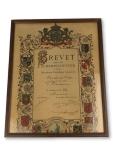
Below is a framed certificate for the sharpshooter of the Special Volunteer Landstorm. The certificate was awarded to Cornelis de Keizer in the voluntary Landstorm corps Dordrecht. The Special Volunteer Landstorm was a regional preparatory exercise. After a period of training, individuals would eventually be assigned to a regular regiment.

image

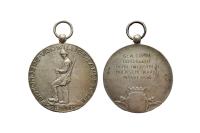
Shooting Medal of the Special Volunteer Landstorm
This silver medal is a prize for the shooting competition held in 1938 in Hoeksche Waard. The medal was awarded by the Regional Committee of Dordrecht. The front of the medal depicts a laborer with a rifle slung over his shoulder, with the inscription “Als ’t moet” below, which translates to “If necessary”. The back of the medal displays the occasion for which it was awarded.

image

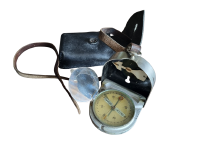
Bezard compass 14 R.A

image

This beautiful Bézard compass was manufactured for use by the pre-war Dutch army. Designated for Dutch use as Compass Model 1922, it features several distinct markings. To start, it is stamped with unit identification. The top of the compass is marked 14 RA, which stands for the 14th Artillery Regiment, and the reverse side is also stamped 14 R.A., indicating that the compass was issued to this regiment for use within the unit. It also carries a serial number: 549. Finally, the compass bears both D.V.D. and D.V.O. markings. The top shows the D.V.D. stamp, which stands for the Department of Defense, while the reverse bears the stamped D.V.O., meaning the Department of War. These markings reveal when the compass was likely produced. Compasses made before 1928 were marked with D.V.O., and those after 1928 with D.V.D.. Because this compass carries both stamps, it was manufactured at least before 1928. [^6]

During the mobilization period, the 14th Artillery Regiment was stationed in Tul en ’t Waal, but later part of the regiment relocated to Dubbeldam. The 3rd Battalion (III-14 R.A.) took up positions near the Zeedijk, where, using three batteries of 12- long steel guns, it was able to provide fire support for the Moerdijk bridgehead. At the time, the positions were manned only by a few sentry posts when, in the early morning of May 10, 1940, German paratroopers from Fallschirmjäger Regiment 1 landed almost directly on top of the gun emplacements. The artillery pieces were quickly captured by the Germans. The troops of III-14 R.A. then launched several counterattacks toward the Zeedijk in an effort to recapture the guns. Many officers of III-14 R.A. were wounded during these engagements. It was only on May 11 that some of the artillery pieces were successfully retaken.

Below you will find the photos of the compass.


[^1] Source: Service Record K. De Munter
[^2] Source: archieven.nl
[^3] Source: oologsbronnen.nl
[^4] Source: The information and the photographs of Sergeant De Munter were kindly provided by Bert‑Jan Dierink from Diepenheim: [facebook] (https://https//www.facebook.com/bertjansmuseum)
[^5] Source: westervoort1940
[^6] Source:  compassmuseum