
2. "Ordedienst" Armband
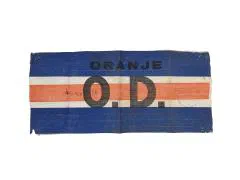
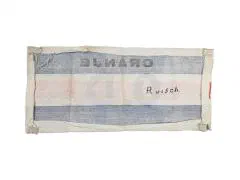
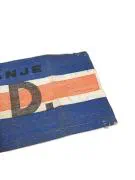
The following photos are of the armband of the Ordedienst Dordrecht, a resitance organisation during the war. The name “Ruisch” is written on the back. The Ordedienst was established in August 1940 through the merger of various illegal organizations. Initially, the organization primarily consisted of former military personnel. It was created with the purpose of maintaining order and facilitating the smooth return of the Dutch government in the event that the Germans would leave the Netherlands, creating a power vacuum. However, this did not happen as the war lasted longer than expected.
During the course of the war, the Ordedienst became increasingly involved in resistance activities, such as sabotage and gathering intelligence to be sent to England. By around 1943, the Ordedienst had been weakened significantly due to arrests and many ex-military members being taken as prisoners of war again. Under the leadership of the new head of the national Ordedienst organization, sabotage activities were halted, and the focus shifted to gathering intelligence and maintaining order for when liberation would come.
In October 1944, like all illegal organizations, the Ordedienst merged into the National Binnenlandse Strijdkrachten (NBS). After consulting archives, it can be concluded that Mr. Ruisch was likely not a former military member. If we assume that the armband belonged to him during the war, he was probably a civilian who later joined the Ordedienst. Although there is no specific information about his Ordedienst past in the archives, that does not necessarily mean he wasn’t part of the Ordedienst. It is difficult to say for certain.
The armband is in the typical colors of Orange Netherlands and is characterized by the letters “O.D.” The faint stamp of Dordrecht can be seen on the right side of the armband. Various types of armbands were used during the war. (Click on the photos for enlargement.)1
Source: Verzetsmuseum - Ordedients . ↩︎