
Others
On this page, you will find items that do not fit into the category of photos or documents.
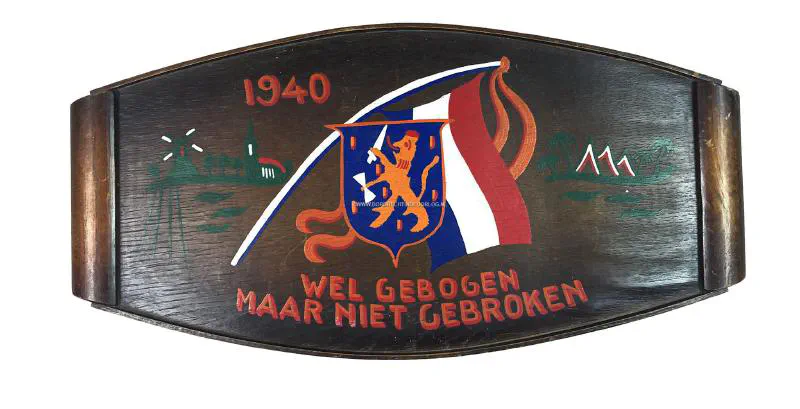
Serving tray: Not broken, but bent.
Below you can see a tray from the war. The tray was found in an antique shop in Dordrecht. After May 1940, many trays like this were made. A modest form of resistance and dislike towards the occupier.
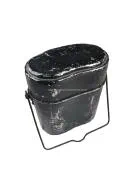
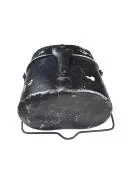
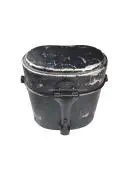
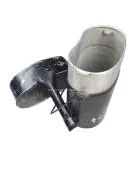
SS Mess Tin, left behind in Dordrecht.
Below you can see a German mess tin that was left behind in Dordrecht after the war. On the bottom of the mess tin, it says: Rich. P. SS Rttf., which stands for SS-Rottenführer, a rank roughly equivalent to that of corporal. It is literally a dark piece of history because, as most people know, the SS was the political-military branch within the German army and responsible for hundreds of thousands, if not millions, of deaths during World War II. The office of the Sicherheitsdienst (Security Service) was located at Singel 137. This is where the head of the SD, Carol Neumann, also had his office. Many arrested members of the resistance were subjected to brutal interrogations here. On February 15, 1945, the resistance in Dordrecht decided to carry out an attack on him at Singel 137, using explosives. Although the attack succeeded without casualties among the resistance, Neumann was not killed. In response, the resistance wrote a letter to the Ortskommandant of Dordrecht, Mr. Graf v. Solms, explaining that the attack was targeting only Neumann and the SD as a reprisal for Neumann’s brutal interrogations. The action seemed to elicit understanding from the Ortskommandant. Neumann was denied access to the Ortskommandatur, did not receive a new office, and was even reported to the Kriegsgericht (War Court) by Solms. Neumann subsequently left with his SD to Utrecht, making the resistance’s action a success. The mess tin below possibly belonged to one of the SS soldiers who worked for the SD. It may have been left behind when the SD left Dordrecht. *1
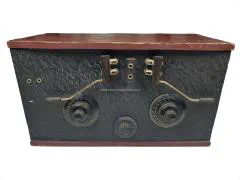
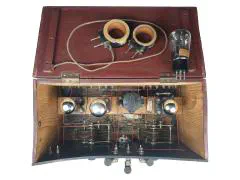
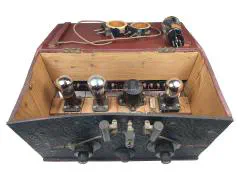
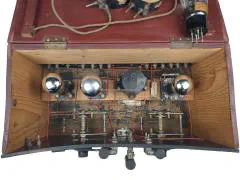
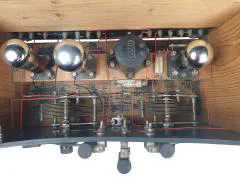
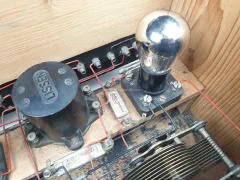
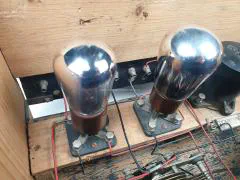
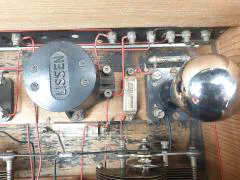
Radio used during the war in Dordrecht
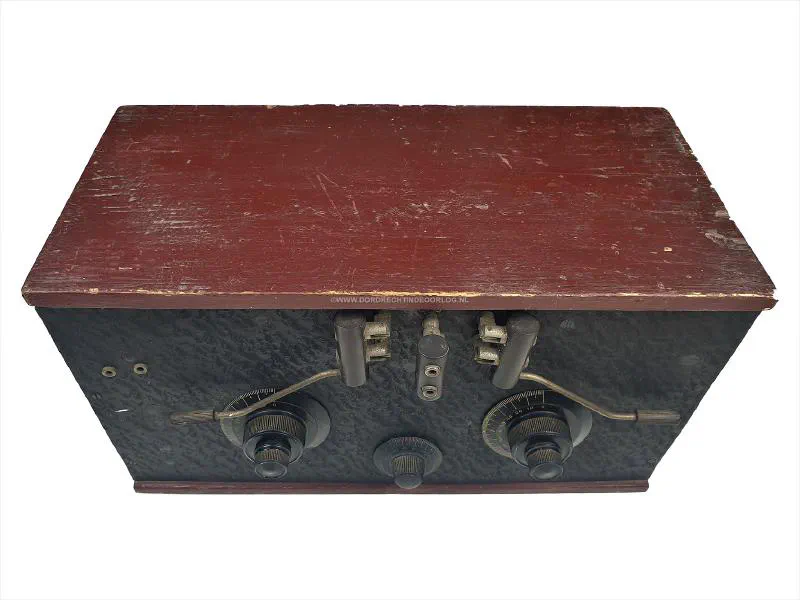
The radio below was a gift from Mr. Ger S from Dordrecht. His maternal grandfather secretly listened to the radio during the war. But that was not without risk. On May 13, 1943, all Dutch citizens were ordered by the German occupiers to turn in their radios. The Germans no longer wanted the Dutch people to listen to Radio Oranje or the BBC. Mr. Sels’ grandfather, Mr. Gerrit Pieter Amerika, lived on Reeweg Zuid during the war. He had two German soldiers billeted with him. One of those Germans was a nice man who also brought food for the family, but the other was a fanatical Nazi who even had a large picture of Adolf Hitler hanging above his bed. However, this did not stop Gerrit Pieter Amerika from complying with the call to turn in the radio. He kept the radio hidden in a cabinet and listened to it during the war whenever the Germans left the house. Fortunately, the Germans never discovered the radio, but using it could have had severe consequences. Anyone caught listening to Radio Oranje or the BBC could expect high fines, confiscation of belongings, and even several months of imprisonment. This radio has survived the war. It is a very special piece of history from a time when listening to the radio was forbidden and tells us about everyday life during the Second World War in Dordrecht.
Armband Voedselvoorziening Zwijndrecht
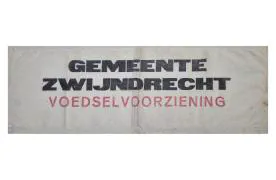
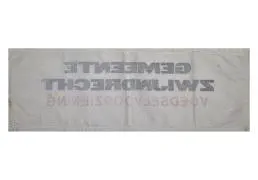
Deze Nederlandse armband werd gedragen door een lid van de Rijksbureau voor Voedselvoorziening in Oorlogstijd, ook wel bekend als het R.B.V.V.O.
Het R.B.V.V.O. werd opgericht in 1940 en bestond tot en met 1945. Het doel van deze organisatie was het verspreiden van voedsel voor de Nederlandse bevolking. Op 29 april 1945 begon Operatie Manna met 242 zware Avro Lancaster bommenwerpers die ditmaal voedselpakketten uitwierpen. Deze voedseldroppings maakten, verspreid over negen dagen, een einde aan de hongersnood in West-Nederland.
Tienduizenden hielpen de voedselpakketten te verzamelen en te verdelen. Deze specifieke armband werd gedragen tijdens de oorlog in de Gemeente Zwijndrecht.